Have you ever seen someone teach a one-year-old child how to walk? Or does the child simply watch the people around them walking and try to imitate them until they succeed, without anyone directly teaching them how to do it?
The same applies to manners and values. Children often learn better when the lesson is naturally connected to a real situation they experience. For example, you do not need to tell a child, “Whenever you see something you like, say TabarakAllah.” Instead, as the child grows and notices their parents using the phrase naturally, they will gradually learn it and adopt it themselves.
Phrases like MashaAllah and TabarakAllah are beautiful expressions that carry meanings connected to gratitude, appreciation, and remembering Allah. However, young children may repeat these phrases without fully understanding their purpose.
This is where structured learning becomes valuable. Through online islamic classes, children can learn Islamic manners, Quran basics, and everyday expressions in a way that matches their age and learning level. Instead of only memorizing words, they begin to connect Islamic teachings with real situations in their lives.
Give yourself or your child the opportunity to learn the Quran with qualified teachers. Start with a free trial class today.

Understanding MashaAllah and TabarakAllah: Meaning and Usage
Blessing (Barakah) means abundant and lasting goodness. The Prophet ﷺ made supplications for blessings for several of his companions رضي الله عنهم, and they received great blessings as a result of those prayers.
The Prophet ﷺ also taught us that when we see something we admire, we should pray for blessings for it. This is mentioned in the story of the noble companions:
Amir ibn Rabi‘ah passed by Sahl ibn Hunayf رضي الله عنهم while he was bathing and said, “I have never seen anything like this today, not even the skin of a hidden maiden.” Shortly after that, Sahl collapsed. He was brought to the Prophet ﷺ, and they said to him, “Help Sahl, he has fallen unconscious.” The Prophet ﷺ asked, “Who do you suspect?” They said, “Amir ibn Rabi‘ah.” The Prophet ﷺ said:
“Why would one of you harm his brother? When one of you sees something about his brother that he admires, let him pray for blessing for him.”
One of the lessons from this hadith is that the evil eye can occur even with admiration and without envy, even from someone who loves another person or from a righteous person. Therefore, when someone sees something they admire, they should quickly make a supplication for blessings for the person or thing they admire, and this becomes a form of protection and supplication.
Likewise, when a Muslim sees something admirable in themselves, they should also pray for blessings. This is based on the saying of the Prophet ﷺ:
“When one of you sees something in himself or his brother that he admires, let him pray for blessings for it, for the evil eye is real.”
Online islamic classes can help you and your child understand more phrases and build a strong foundation in their faith.
Difference between MashaAllah and TabarakAllah
In online islamic classes , to teach children the difference between MashaAllah and TabarakAllah, we can share another story with them.
Allah ﷻ gives the example of two men: one of them was wealthy and blessed. Allah had granted him two magnificent gardens (orchards) of grapevines, surrounded by date palm trees, with green crops and hanging fruits between them. Rivers flowed through the gardens to provide irrigation.
The other man was a believing person who was poor but content with Allah’s decree.
The owner of the two gardens became proud because of what he possessed. He became arrogant and boastful, saying to his believing companion: “I have more wealth than you and I am stronger and more powerful because of my followers and servants.”
He entered his garden while denying the power of Allah and the resurrection. He thought that his garden would never disappear and believed that his blessings were the result of his own effort and intelligence, not a favor from Allah. He said:
“I do not think that this will ever perish, and I do not think the Hour will ever come.”
His believing friend responded by reminding him of Allah’s greatness and His blessings, warning him against arrogance and denial. He advised him to be humble and grateful for the blessing by saying:
“Why, when you entered your garden, did you not say: MashaAllah, there is no power except with Allah?”
The arrogant man did not listen to his friend’s advice. Then Allah’s command and power came, and He sent a disaster upon the two gardens, leaving them destroyed and empty.
In the morning, the owner of the gardens went to check his crops and found them ruined. He began turning his hands in regret and sorrow over the wealth he had spent on them, wishing that he had been a believer and had not associated anyone with his Lord.
Therefore, some scholars have mentioned that the difference between MashaAllah and TabarakAllah is that: we say MashaAllah when we admire something related to ourselves, while we say TabarakAllah when we see something admirable in others.
However, both expressions are good and can be used in both situations. This is supported by the teachings of the Prophet ﷺ, who encouraged us to pray for blessings for ourselves and for our brothers and sisters. The important thing is to recognize that blessings come from Allah and to ask Him for barakah.
A good Islamic Studies program does not only explain vocabulary and tell stories. It connects words with values, manners, and everyday behavior. This makes religious learning meaningful rather than just a list of phrases to memorize.

How Online Islamic Classes Turn Islamic Knowledge Into Daily Practice
When Lady Aisha رضي الله عنها described the character of the Prophet ﷺ, she said that his character was the Quran. This means that the Quran is the first source of our manners and values.
That is why at Rattil Academy, we focus on transforming online quran classes for kids from simple memorization into practical values that children can apply in their lives. We help children discover the lessons and morals within the verses through carefully designed learning plans, interactive activities, and engaging methods.
In online islamic studies for kids, our goal is to turn Quranic teachings into everyday behaviors that become a natural part of how children speak, act, and interact with others, and we achieve this through:
Role Modeling Before Words
Children are excellent observers. Seeing parents and adults practice honesty, respect others, and act with integrity helps these values become a natural part of a child’s identity. That is why we are careful to choose teachers who demonstrate these qualities themselves, making it easier for children to absorb positive manners and character from them.
Positive Reinforcement (Rewards)
Praising good behavior and offering simple emotional or material rewards helps children recognize and repeat positive actions more quickly. This is why we encourage children through small rewards during lessons, as well as bigger celebrations after completing important stages in their learning journey.
Conversation and Discussion
Turning education from giving direct commands into a style based on discussion is one of the most effective ways to plant values in children. Our courses are not just lessons; they are interactive sessions filled with conversation, reflection, and connection. We explain to children, for example, why we apologize, why we help those in need, and how their actions can affect the feelings of others.
Using Stories and Real-Life Situations
Educational stories and daily experiences provide the best opportunities to apply moral concepts practically. Through storytelling, children learn from the mistakes of others, discuss different choices, and share their opinions about actions and behaviors.
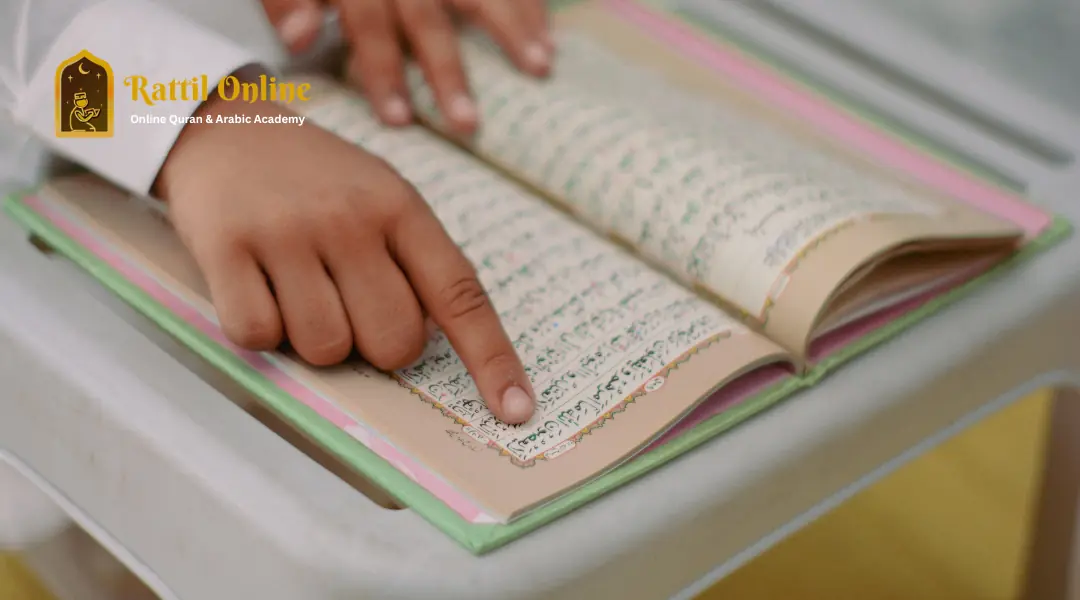
The advantage of online islamic classes is that learning can happen in a comfortable environment. A child can attend a lesson from home, interact with the teacher, ask questions, and practice without feeling overwhelmed.
Tips to Choose the Right Online Islamic Classes for Kids
Choosing the right learning program for your child requires looking beyond the course title. A good Islamic learning experience should match your child’s age, personality, and current level. Here are important points parents should consider:
1. Look for Structured Lessons
Children benefit from organized lessons with clear goals. As in our step-by-step curriculum your child gain essential knowledge in:
- Aqeedah (Islamic Creed) – Build a clear understanding of Islamic beliefs and tawheed.
- Fiqh (Islamic Jurisprudence) – Learn practical rulings for purification, prayer, zakah, fasting, and daily life.
- Seerah (The Life of the Prophet Muhammad ﷺ) – Explore the major events and timeless lessons from the Prophet’s life.
- Hadith Sciences – Discover how the sayings and actions of the Prophet ﷺ were collected and preserved.
- Tafsir & Qur’anic Themes – Understand the meaning, message, and context of Qur’anic verses.
- Islamic Manners & Daily Practice – Learn etiquettes, expressions, and personal conduct from an Islamic lens.
2. Choose Teachers Who Understand Children
In online islamic classes, a teacher’s ability to communicate with kids matters greatly. Young learners need encouragement, simple explanations, and a positive environment. Rattil Academy founded by a team of Muslim scholars who are native and have long-experience teaching Quran, Arabic, and Islam online to kids & adults. We make learning the Holy Quran easy with qualified teachers from Arab countries.
3. Consider Flexible Learning Options
Children learn Islam through small moments. A simple phrase they hear, a story, or a lesson with a caring teacher can shape the way they understand their faith. When learning happens through these small moments without pressure or forcing, attending lessons becomes easier for the child. In fact, the child may start looking forward to lesson time and feel excited to join on their own.
So Rattil Academy provides schedules that fit around school and family responsibilities. Online learning provides flexibility while maintaining regular lessons.
4. Try Before You Commit
A Free Trial before online islamic classes in Rattil Academy helps parents understand the teaching style, lesson structure, and whether the program feels suitable for their child.

Start Building Your Child’s Islamic Learning Journey Today With Rattile Academy
Every child deserves an Islamic learning experience that feels supportive, engaging, and meaningful. At Rattile Academy, children can learn Quran, Islamic manners, and essential Islamic knowledge through structured online islamic classes designed for different learning levels.
The academy focuses on helping children understand what they learn, not just memorize information. This is through:
Open Dialogue and Answering Questions
We listen to your child’s questions about religion with patience and openness without criticism. Clear and accurate answers help build a strong and conscious identity and enable children to understand and recognize what is right.
Connecting Worship with Love, Not Fear
Our online islamic classes encourage your child to practice acts of worship such as prayer and fasting gradually through motivation and positive encouragement. Help them connect these acts with their love for Allah and gratitude for His blessings, rather than using fear or punishment as the main approach.
Stories and Islamic History
In our islamic studies courses we use resources such as children’s encyclopedias or stories from the lives of the Prophets and Companions to teach courage, kindness, and good character in an enjoyable way that captures their attention.
Positive Friends and Environment:
Also, we encourage your child to join community activities and groups that support Islamic values. A positive environment and good friendships help strengthen their Islamic identity and reinforce the values they learn.
Help your child learn Islamic manners and Quran online
Start your child’s journey with Rattile Academy through engaging Islamic learning, Quran lessons, and trusted guidance.
Conclusion
Teaching children phrases like MashaAllah and TabarakAllah is a small step that can create a lasting impact. These expressions help children recognize blessings, show appreciation, and build a stronger connection with Islamic values.
Through online islamic classes at Rattile Academy, parents can provide their children with organized lessons that combine Quran learning, Islamic manners, and practical knowledge. A meaningful Islamic education journey starts with simple lessons that become lifelong habits.
Book your child’s Free Trial today and discover how online learning can support their Islamic growth.
FAQs
What Do MashaAllah and TabarakAllah Mean?
MashaAllah is said when appreciating something while remembering that it happens by Allah’s will. TabarakAllah is used to recognize Allah’s blessings and greatness.
What Is the Difference Between MashaAllah and TabarakAllah?
Both expressions show appreciation for Allah’s blessings. MashaAllah focuses on Allah’s will, while TabarakAllah highlights His blessings and greatness.
Are Online Islamic Classes Suitable for Children?
Yes. Online Islamic classes help children and beginners learn Quran, Islamic manners, and basic values through age-appropriate lessons.
What Do Children Learn in Islamic Studies and Quran Classes?
Children learn Quran recitation, Islamic manners, daily duas, and important values. Some courses also include Arabic learning to support their understanding.