

With the arrival of the blessed month of Ramadan, the question: What to eat for Suhoor in Ramadan? is frequently asked. The meal must contain balanced nutrients that hydrate the body and provide it with energy during fasting, especially since there are some foods that cause thirst, lethargy, or headaches and should be avoided completely. In this article, we will clarify the foods that are recommended to be eaten based on the Sunnah of the Prophet, peace be upon him (PBUH).
What is the Sunnah of the Prophet (PBUH) Regarding Suhoor?
Muslims must follow the example of the Prophet (PBUH) in Suhoor because the Suhoor meal has many virtues and blessings:
The Ruling on Suhoor
It is recommended (Mustahabb) for a Muslim to take Suhoor, following the Sunnah of the Prophet (PBUH). According to the Hadith of Anas (may Allah be pleased with him), the Prophet (PBUH) said:
“تَسَحَّرُوا فَإِنَّ فِي السَّحُورِ بَرَكَةً”
“Take Suhur as there is a blessing in it.”
Sahih al-Bukhari: 1923
Also, Narrated Anas bin Malik: That the Prophet (ﷺ) and Zaid bin Thabit took Suhur together and when they finished the Suhur, the Prophet (ﷺ) stood up for the prayer and offered it. We asked Anas, “What was the interval between their finishing the Suhur and the start of the prayer?” He replied, “The time taken to recite fifty verses (of the Quran).
Time of Suhoor
One of the Sunnahs of the Prophet (PBUH) is to delay the time of Suhoor without letting doubt enter your heart that the Fajr Adhan might be called while you are eating Suhoor.
The Sunnah in the Suhoor Meal
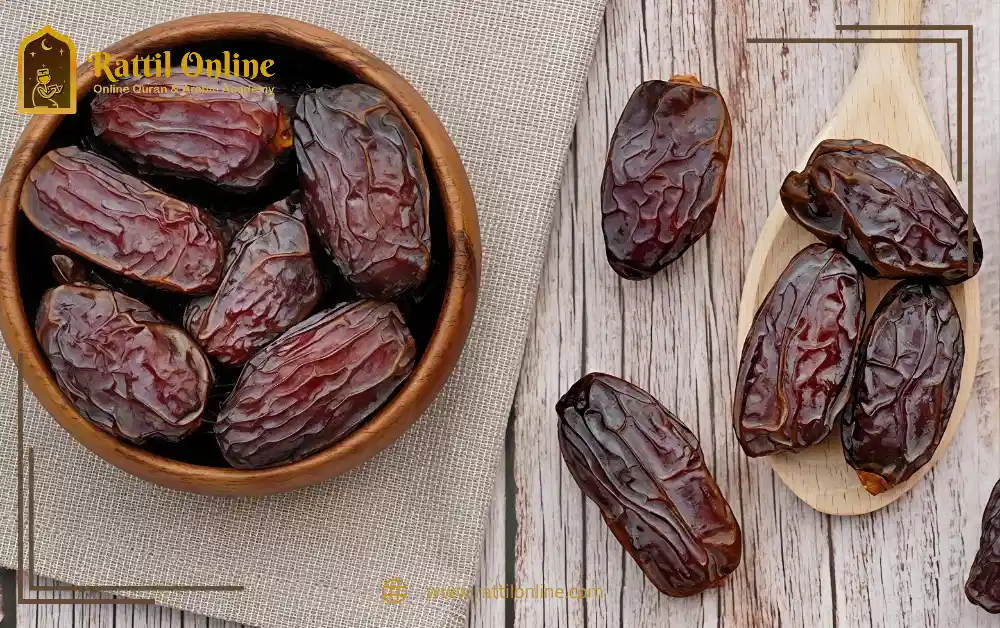
The Prophet (PBUH) used to take dates for Suhoor. Abu Hurairah (may Allah be pleased with him) reported that the Prophet (PBUH) said:
“نِعْمَ سَحُورُ الْمُؤْمِنِ التَّمْرُ”
“How good is the suhur of dates for a believer!”
Thus, it is Sunnah to take Suhoor with dates.
What to Eat for Suhoor in Ramadan?
For everyone asking “What to eat for Suhoor in Ramadan?”, here are some foods recommended to eat:
- Dates: It is recommended to eat them because it is a Sunnah of the Prophet (PBUH), and they provide the body with many benefits and nutrients such as Vitamin B, Vitamin C, E, K, potassium, calcium, and iron.
- Vegetables like Spinach and Corn: These are considered healthy foods because they contain fibre that makes the body feel full for a long time and helps the body maintain energy levels.
- Eggs: Eggs are characterised by containing various nutrients such as calcium, protein, and many other vitamins that prevent the body from feeling weak during fasting.
- Fruits: There are many fruits recommended to eat, such as bananas, mangoes, avocados, pears, and oranges, because each contains fibre that increases the body’s energy and makes it stronger during fasting.
Should the Suhoor Meal Not Be Missed?
After clarifying the answer to “What to eat for Suhoor in Ramadan?”, we would like to clarify that Suhoor is a confirmed Sunnah of the Prophet (PBUH), and whoever does not take Suhoor has abandoned the Sunnah. If a Muslim fasts without Suhoor, this does not invalidate their fast and there is no sin on them, as the fast is valid, but it is preferable to follow the Sunnah of the Prophet and take Suhoor with whatever is available.
Medically, it is recommended not to miss Suhoor because it stabilises sugar levels, prevents dehydration, and reduces fatigue and exhaustion during fasting, especially for active people or diabetic patients.
If you want to learn more about the virtues of fasting and Suhoor according to the Sunnah, the Islamic Studies course is perfect. It covers fasting rules, Suhoor benefits, and healthy eating tips, helping you follow the Prophet’s guidance in daily life.
How to Choose a Suhoor Meal That Helps You Sleep and Feel Comfortable?
To choose the best Suhoor meal that helps you sleep and feel comfortable, you should observe the following:
- Replace sugars with items rich in proteins and fibre.
- Drink sufficient amounts of water because it helps with hydration and limits the feeling of dizziness or headaches.
- Avoid consuming oils and fats because they are difficult to digest and cause health problems.
Foods and Drinks to Avoid at Suhoor
There are some foods that should be completely avoided in the Suhoor meal so as not to be a burden on you during the fasting time, including:
- Greasy Pies or French Fries: Because they are not easily digested and increase stomach heaviness, thus giving the fasting person a feeling of laziness and lethargy with the possibility of feeling thirsty.
- Salty Foods: These foods include very salty cheeses of various kinds and pickles. They result in high sodium levels and a feeling of thirst. Excessive consumption can also lead to feeling stress and exposure to dehydration.
- Sweets and Sugars: These foods can lead to a rapid rise in blood glucose levels, thus the possibility of experiencing a sudden drop (sugar crash) and feeling hungry and exhausted. They also do not provide the body with sustained energy.
- Spicy Foods: These include hot spices that increase acidity and lead to stomach irritation, thus causing discomfort during fasting and the possibility of worsening the symptoms they cause.
- White Bread: It is not recommended to eat these baked goods because they do not make the body feel full and are digested quickly. Therefore, it is preferable to eat whole grains that contain fibre instead.
Important Nutritional Tips for a Healthy Suhoor in Ramadan
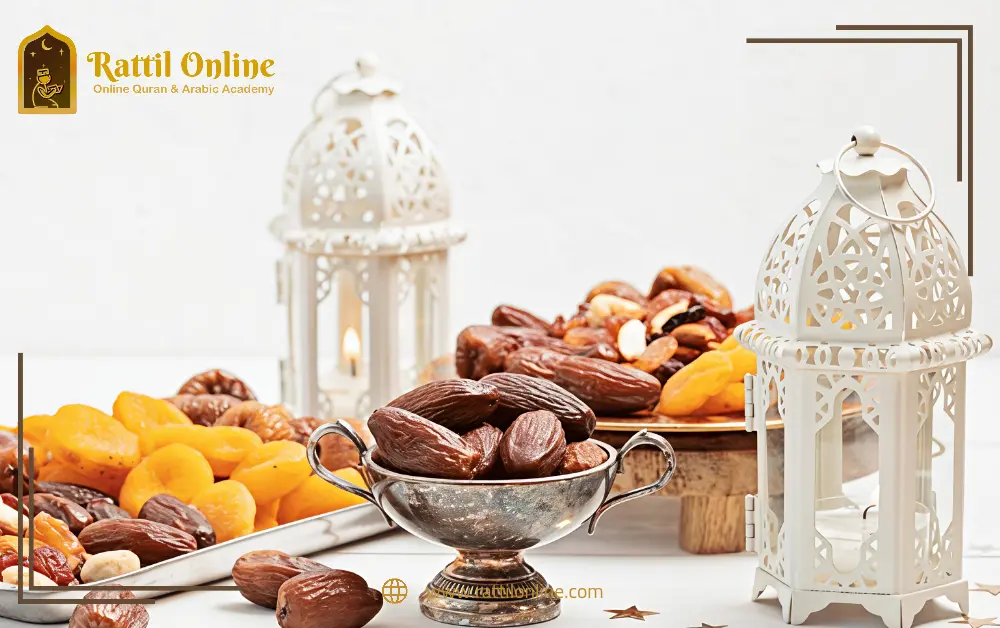
After learning what to eat for Suhoor in Ramadan, you should observe these tips for a healthy and balanced Suhoor:
- The Suhoor meal should be balanced, containing protein, healthy fats, vegetables, and so on.
- Do not forget to maintain body hydration between Iftar and Suhoor meals by drinking sufficient amounts of water.
- Avoid consuming drinks containing caffeine after Suhoor, such as tea and coffee.
- You can eat hydrating vegetables at Suhoor, which include cucumbers and rocket (arugula).
- Avoid wastefulness and exaggeration in the amount of food so as not to cause negative health results.
Use Ramadan to strengthen your connection with the Quran. The Quran Memorization course teaches proper recitation and memorization, making your fasting days spiritually productive while improving your Quranic skills.
Book your free trial spot today
FAQs
How to lose belly fat in Ramadan fasting?
To get rid of belly fat in Ramadan, you should eat balanced meals at Suhoor and Iftar, drink sufficient amounts of water, and exercise regularly.
Can I brush my teeth in Ramadan?
Yes, this is possible, but care must be taken not to swallow anything if cleaning with mouthwash or toothpaste, so that nothing reaches the throat.
Can I still eat if I miss suhoor?
Yes, you can eat and drink as long as the Fajr Adhan has not been called, even if you missed the planned Suhoor time. But if the Adhan is called, you must fast and not consume anything.
Conclusion
Finally, after answering: What to eat for Suhoor in Ramadan? we would like to note that the Suhoor meal must be balanced to contain all the nutrients that provide the body with energy and give it a feeling of satiety for the longest time, while avoiding substances that increase the hardship of fasting. It is preferable not to miss Suhoor because it is one of the Sunnahs of the Prophet (PBUH). Contact us now and get exclusive tips, guidance, certificates, support, and special offers.
